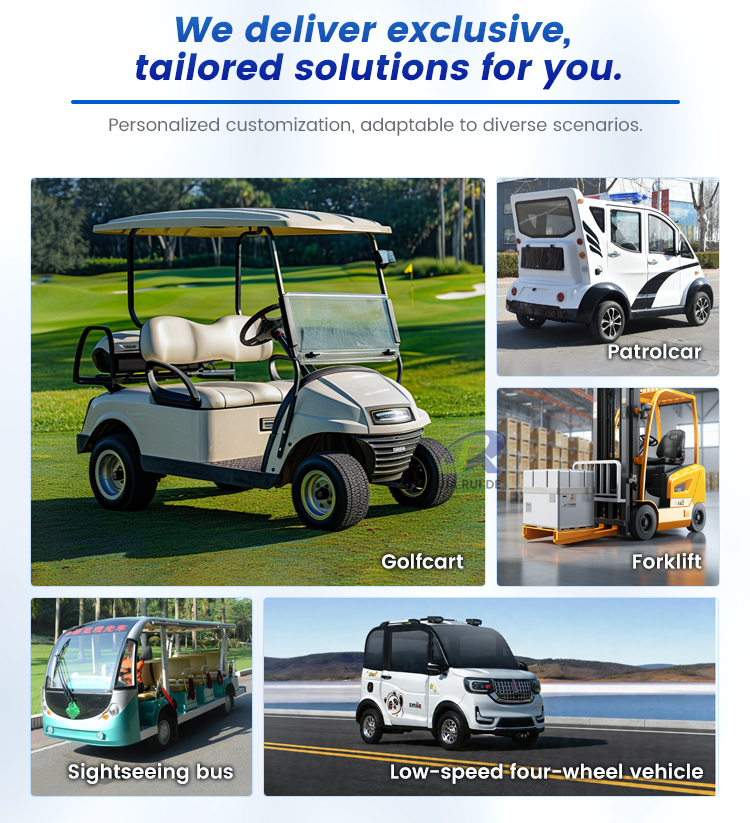
With the rapid development of lithium batteries, more and more industries are using them. Today we're talking about golf carts, and how should we choose between traditional lead-acid batteries and lithium batteries? Traditional lead-acid batteries are being rapidly replaced by lithium iron phosphate (LiFePO₄) batteries due to their cumbersome maintenance, short lifespan, and heavy weight. Lithium batteries, with their advantages of lightweight design, long lifespan, fast charging, and maintenance-free operation, have become the preferred solution for efficient golf course operation and user comfort, and are also the mainstream direction for upgrading the power of low-speed electric vehicles.
I. Cell Type: Lithium Iron Phosphate Preferred
Golf carts should prioritize lithium iron phosphate (LiFePO₄) cells. Compared to ternary lithium batteries, they offer stronger thermal stability, longer cycle life, and more controllable costs, making them the optimal solution for low-speed commuter vehicles and eliminating the risk of thermal runaway.
II. Voltage and Capacity Matching
Standard 2-seater golf carts: 36V/48V system, capacity 80–100Ah, meeting daily commuting and 18-hole golfing needs;
4-seater/heavy-duty/hilly courses: 72V system, capacity 105–120Ah, ensuring power and range;
Core principle: Voltage should match the original vehicle controller, and capacity should be selected based on 1.2 times the daily operating mileage, with redundancy.
III. Intelligent BMS Protection System
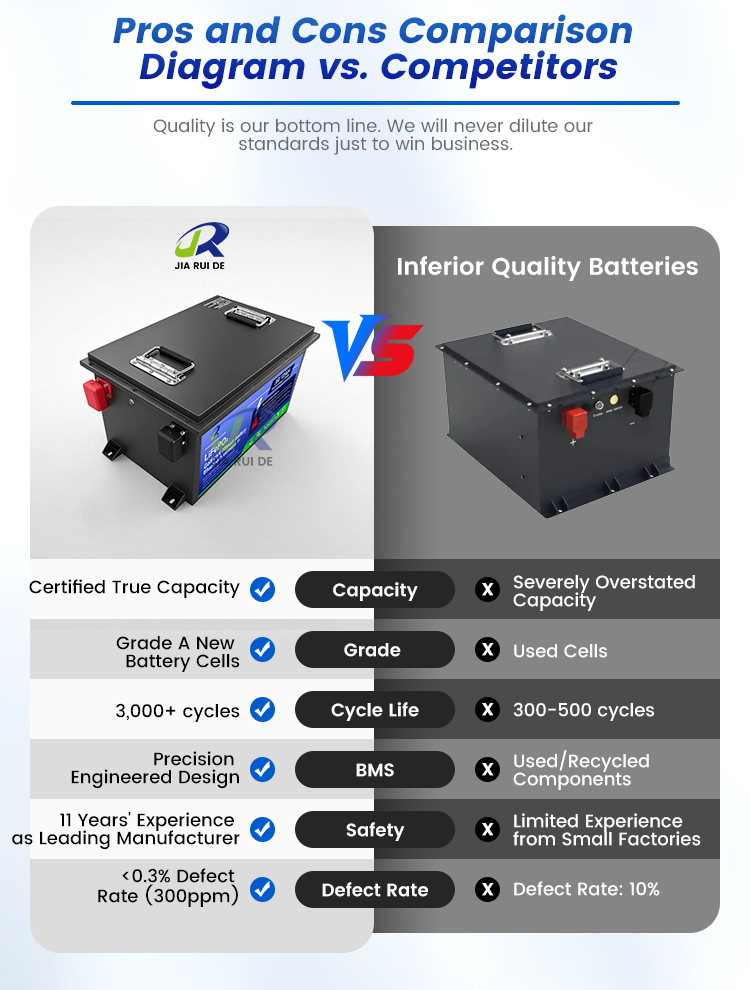
Reject inferior batteries without a BMS! The Battery Management System (BMS) needs to monitor individual cell voltage, total voltage, current, and temperature in real time to achieve cell balancing, fault alarms, and automatic power-off, ensuring battery safety and stability and extending its lifespan.
IV. Certifications and Quality
Choose products with CE, UN38.3, and ISO9001 certifications, prioritizing reputable manufacturers to avoid disassembled cells and reassembled batteries, ensuring after-sales service and safety.